Crypto Trading vs Crypto Investing in India: Tax and Risk Differences (2026)
Crypto trading and crypto investing may look similar because both involve buying and selling Virtual Digital Assets (VDAs). But the time horizon, frequency of transactions, risk management and tax record-keeping can be very different.
In India, one important point applies to both: income from transfer of VDAs is currently subject to a 30% tax under Section 115BBH, along with applicable surcharge and 4% health and education cess. The Income Tax Department also requires transaction-wise disclosure through Schedule VDA.
So the difference between “trading” and “investing” does not automatically create two different VDA tax rates.
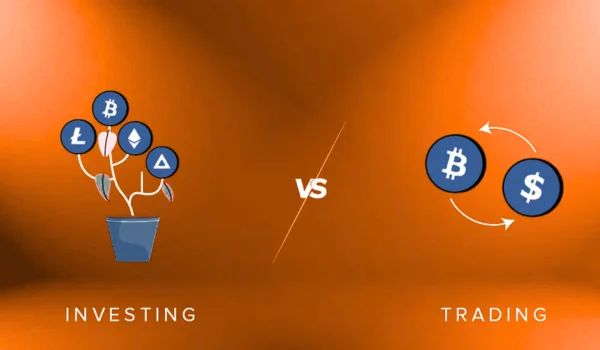
Crypto Trading vs Crypto Investing: Quick Comparison
| Factor | Crypto Trading | Crypto Investing |
| Typical approach | Frequent buying and selling | Buy and hold for longer |
| Time horizon | Short-term | Medium/long-term |
| Number of transactions | Usually higher | Usually lower |
| Market monitoring | Frequent | Less frequent |
| Tax rate on VDA transfer income | 30%* | 30%* |
| Transaction records | More complicated | Comparatively simpler |
| TDS tracking | Can become frequent | Usually less complicated |
| Main risk | Volatility + frequent decisions | Long-term price decline |
| Emotional pressure | Generally higher | Generally lower |
| Strategy | Short-term price movements | Long-term potential |
| Guaranteed return | No | No |
*Subject to the applicable VDA provisions, surcharge and cess.
What Is Crypto Trading?
Crypto trading generally means buying and selling digital assets more frequently to benefit from price movements.
For example:
Buy Bitcoin → price rises → sell → buy again → sell again
A trader may make:
- Several transactions a month
- Dozens of transactions
- Hundreds of transactions
The objective is usually to benefit from shorter-term price movements.
Trading can potentially generate profits, but frequent transactions also mean more opportunities for losses, mistakes and tax-record complications.
What Is Crypto Investing?
Crypto investing generally means purchasing a crypto asset with a longer-term view.
For example:
Buy Bitcoin in 2026 → hold for several years → sell later
An investor may make far fewer taxable transfers than an active trader.
However, “long-term” does not mean “safe.”
Crypto prices can fall sharply, and holding an asset for several years does not guarantee a profit.
Is Crypto Trading Taxed Differently From Crypto Investing?
This is one of the biggest misconceptions.
Simply calling yourself a trader or investor does not automatically change the special VDA tax rate.
The Income Tax Department states that gains from VDAs are subject to 30% tax under Section 115BBH, along with applicable surcharge and 4% cess.
The current ITR framework also includes Schedule VDA for reporting VDA transfers transaction-wise.
Therefore, don’t assume:
“I am a long-term investor, so I will get the lower long-term capital gains rate.”
That assumption does not apply to VDA income under the special regime.
How Crypto Profit Is Calculated
For a basic transaction:
Income from transfer = Consideration received − Cost of acquisition
For example:
You buy Bitcoin for:
₹2,00,000
Later transfer it for:
₹3,00,000
Your income from the transfer is:
₹1,00,000
The current Schedule VDA specifically captures the cost of acquisition, consideration received and income from transfer.
Example: Crypto Investor
Suppose an investor:
Buys Bitcoin for ₹5 lakh
and several years later:
Sells it for ₹8 lakh
Simplified income:
₹8 lakh − ₹5 lakh = ₹3 lakh
At the 30% VDA tax rate:
₹3,00,000 × 30% = ₹90,000
4% cess:
₹3,600
Total before applicable surcharge:
₹93,600
This is a simplified illustration and does not account for any applicable TDS credit or other tax-return considerations.
Example: Active Crypto Trader
Now consider a trader who makes multiple transactions:
| Trade | Cost | Transfer Value | Income/Loss |
| BTC | ₹1,00,000 | ₹1,30,000 | ₹30,000 |
| ETH | ₹80,000 | ₹1,00,000 | ₹20,000 |
| BTC | ₹1,50,000 | ₹1,90,000 | ₹40,000 |
| SOL | ₹60,000 | ₹50,000 | Loss |
The trader has multiple transactions to track.
This is where tax compliance can become significantly more complicated than for someone who makes only one or two transfers.
The current Schedule VDA requires details of every transaction where a transfer occurs.
Crypto Trading Has a Bigger Record-Keeping Burden
An investor might have:
3–5 relevant transactions
A trader could have:
100+ transactions
You may need to track:
- Date of acquisition
- Date of transfer
- Crypto asset
- Quantity
- Cost of acquisition
- Consideration received
- Exchange
- TDS
- Wallet transactions
- Crypto-to-crypto swaps
The Income Tax Department’s current Schedule VDA is transaction-wise rather than simply asking for one annual profit number.
What About Crypto-to-Crypto Trading?
Suppose you exchange:
Bitcoin → Ethereum
You haven’t received cash in your bank account.
That doesn’t mean you should automatically ignore the transaction.
The current VDA reporting framework recognizes transfers and requires transaction-level information. The TDS framework also specifically accommodates VDA transactions involving exchange for another VDA.
Therefore, active traders need particularly good records for crypto-to-crypto transactions.
Crypto Trading and 1% TDS
Another important difference is transaction frequency.
Where the applicable VDA TDS provisions require it, TDS can be deducted at 1% of the relevant consideration, subject to the applicable rules and thresholds.
This doesn’t mean:
1% TDS = final crypto tax
They are different.
For example:
Crypto transfer value = ₹2,00,000
Possible TDS:
₹2,000
But suppose:
Cost of acquisition = ₹1,50,000
Then simplified income from transfer:
₹50,000
The 1% TDS is not calculated on the ₹50,000 profit.
Trading Can Create More TDS Transactions
An active trader may have many qualifying transactions.
For example:
Trade 1 → TDS
Trade 2 → TDS
Trade 3 → TDS
Trade 4 → TDS
This means the trader needs to reconcile a larger amount of transaction-level TDS information.
The current tax framework also provides Form 142 for certain VDA exchanges that have agreed to deposit tax on behalf of buyers or brokers under Section 393(1).
Risk Difference: Trading vs Investing
Tax isn’t the only difference.
The risk profile can be very different.
Trading Risk
A trader is exposed to:
- Short-term volatility
- Frequent buying and selling
- Timing risk
- Emotional decisions
- Overtrading
- Leverage risk, where used
- Higher transaction frequency
- More opportunities to make mistakes
The trader needs to make many decisions correctly.
Investing Risk
A long-term investor generally makes fewer decisions but faces:
- Long-term price decline
- Project failure
- Regulatory uncertainty
- Technology risk
- Liquidity risk
- Concentration risk
- Market cycles
The biggest mistake is assuming that holding for a long time automatically removes risk.
It doesn’t.
Which Is More Risky?
There is no universal answer.
But active crypto trading can create more decision-making and execution risk, while crypto investing exposes you to the possibility that the asset itself may perform poorly over a long period.
For example:
A trader could lose money because of repeated short-term decisions.
An investor could lose money because the asset falls substantially and never recovers to the investor’s purchase price.
Both approaches can lose money.
Crypto Trading and Leverage
Leverage can make trading substantially more dangerous.
Suppose you have:
₹1 lakh
and use leverage to control a much larger position.
A relatively small adverse price movement can produce a disproportionately large loss.
Leverage can also create liquidation risk.
Therefore, someone comparing crypto trading with investing should not look only at expected returns.
They should also consider:
How much capital can I afford to lose?
Crypto Investing Is Not the Same as Safe Investing
Bitcoin or another crypto asset can be held for five or ten years and still experience major price declines.
Crypto investing should therefore not be confused with:
- Fixed deposits
- Government securities
- Savings accounts
These products have very different risk characteristics.
A long holding period can reduce the importance of short-term price movements, but it cannot guarantee a positive return.
Which Requires More Time?
Trading
Usually requires more time for:
- Market analysis
- Monitoring prices
- Managing positions
- Recording transactions
- Reviewing trades
- Tax reconciliation
Investing
Generally requires less day-to-day monitoring.
An investor may establish a strategy and review the portfolio periodically.
This doesn’t mean investors should ignore their holdings completely.
Which Is Better for Beginners?
There is no universally correct answer.
But beginners should understand an important distinction:
Trading requires a repeatable strategy and strong risk management.
Simply buying and selling because a coin is trending is not a trading strategy.
Likewise:
Investing requires understanding what you own and why you are holding it.
Buying a cryptocurrency simply because its price has increased rapidly is not necessarily a sound investment process.
Trading vs Investing: Time Horizon
| Approach | Typical Holding Style |
| Intraday trading | Same-day positions |
| Short-term trading | Days/weeks |
| Swing trading | Days/weeks/months |
| Long-term investing | Years |
| Goal-based investing | Based on financial goal |
These categories are descriptive rather than legal tax classifications.
Does Holding Crypto Longer Reduce Tax?
Not automatically.
This is another important difference from traditional investments where holding period can affect capital-gains treatment.
Under the VDA special tax regime, the Income Tax Department states that gains are taxed at 30% under Section 115BBH.
Therefore:
Buy today + sell tomorrow
and
Buy today + sell several years later
do not automatically receive separate 10%/20%/12.5% VDA rates simply because the holding periods are different.
Can Crypto Losses Reduce Crypto Gains?
This is particularly important for traders.
The special VDA provisions restrict the treatment of losses from VDA transfers.
You should not assume that you can use one crypto trade’s loss to reduce another crypto trade’s gain in the same way that certain capital losses can be handled for other investments.
The tax return’s Schedule VDA itself instructs taxpayers to enter nil income in case of loss for the individual transaction.
This can make frequent trading particularly important from a tax-planning perspective.
Example: Trader With Profits and Losses
Suppose:
BTC profit = ₹1,00,000
ETH profit = ₹50,000
SOL loss = ₹40,000
A beginner might calculate:
₹1,00,000 + ₹50,000 − ₹40,000 = ₹1,10,000
But VDA loss rules mean you should not automatically use this calculation for your tax return.
The VDA regime has specific restrictions on loss set-off and carry-forward.
Therefore, active traders should maintain transaction-level records and seek professional advice where the portfolio is complex.
Tax Comparison
| Tax Consideration | Trading | Investing |
| VDA special tax | Applicable | Applicable |
| 30% rate under 115BBH | Yes, where applicable | Yes, where applicable |
| Holding-period benefit | No automatic lower VDA rate | No automatic lower VDA rate |
| Transaction reporting | More frequent | Less frequent |
| TDS reconciliation | Potentially more complicated | Usually simpler |
| Loss rules | Important due to frequent transactions | Still important |
| Schedule VDA | Required for applicable transfers | Required for applicable transfers |
The Income Tax Department’s current ITR guidance confirms the 30% VDA tax and separate Schedule VDA.
How to Decide Between Trading and Investing
Ask yourself these questions.
- How much time can you dedicate?
If you don’t have time to monitor markets and maintain detailed records, frequent trading may be difficult.
- Can you handle large price movements?
Crypto can be extremely volatile.
- Do you have a clear strategy?
Trading without predefined entry, exit and risk rules can quickly become speculation.
- What is your financial goal?
Money needed for an important short-term goal should not automatically be exposed to highly volatile assets.
- Can you tolerate a major loss?
If a large fall would seriously affect your finances, your exposure should be considered carefully.
A Simple Decision Framework
Consider a Long-Term Approach If:
- You have a long time horizon
- You don’t want to monitor prices constantly
- You understand the asset’s risks
- You can tolerate significant volatility
- You have a clear reason for holding
Be More Careful With Trading If:
- You are trading based on social-media tips
- You frequently change strategies
- You use excessive leverage
- You don’t maintain transaction records
- You cannot afford significant losses
- You are trying to recover previous losses quickly
Don’t Forget Inflation
A nominal crypto profit isn’t necessarily the same as an increase in purchasing power.
For example:
You invest:
₹5 lakh
and eventually receive:
₹8 lakh
Your nominal gain is:
₹3 lakh
But inflation reduces the purchasing power of money over time.
Therefore, long-term investors should consider:
Return − tax − inflation
rather than looking only at the headline percentage gain.
What About Tax-Efficient Trading Strategies?
Crypto investors should be cautious about trying to create artificial transactions simply to manipulate tax outcomes.
For example, repeatedly buying and selling an asset without a genuine investment rationale just to generate a particular tax result can create unnecessary transaction costs and compliance complications.
A better approach is:
Trade according to your investment strategy → maintain accurate records → calculate tax correctly.
Record-Keeping Checklist for Crypto Traders
If you trade frequently, maintain:
- Exchange statements
- Order history
- Deposit records
- Withdrawal records
- Buy transactions
- Sell transactions
- Crypto-to-crypto swaps
- Wallet transfers
- Cost of acquisition
- Transfer consideration
- TDS records
- Tax statements
The current Schedule VDA requires transaction-wise reporting, so keeping detailed records is especially important for active traders.
Which One Has Higher Return Potential?
Neither trading nor investing guarantees a higher return.
A skilled trader may outperform a long-term investor during certain periods.
A long-term investor may outperform an active trader after accounting for:
- Trading mistakes
- Frequent losses
- Transaction costs
- Time spent
- Taxes
- Emotional decisions
The correct comparison isn’t:
“Which makes more money?”
It is:
“Which approach can I follow consistently while managing the risks and tax obligations?”
Common Mistakes
Treating Crypto Like Stocks
VDA taxation has its own special rules.
Assuming Long-Term Holding Gets a Lower Tax Rate
The 30% VDA regime does not automatically become a lower long-term capital-gains rate because you held the asset longer.
Ignoring TDS
TDS needs to be reconciled with your transaction records and available tax information.
Ignoring Crypto-to-Crypto Swaps
A transaction doesn’t become irrelevant simply because you didn’t receive INR.
Using Crypto Losses Like Normal Capital Losses
The VDA loss restrictions are different.
Trading Without Records
Hundreds of transactions can become extremely difficult to reconstruct later.
Final Verdict
Crypto trading and crypto investing are different strategies, but India’s VDA tax regime does not simply give one a lower tax rate because it is called “investing.”
For applicable VDA income, the Income Tax Department currently specifies a 30% tax under Section 115BBH, plus applicable surcharge and 4% cess. VDA transfers also need transaction-wise disclosure through Schedule VDA.
The biggest practical difference is therefore frequency, risk and record-keeping.
Crypto trading:
More transactions → more decisions → more record keeping → potentially greater short-term risk.
Crypto investing:
Fewer transactions → longer holding period → less day-to-day monitoring → but still substantial asset and market risk.
And remember:
A longer holding period doesn’t make crypto risk-free, and a higher trading frequency doesn’t guarantee higher returns.
For most people, the better approach is the one that matches their financial goals, risk tolerance, available time and ability to comply with India’s VDA tax rules.
You may also like

Leave a Reply