What Happens If You Receive a Legal Notice and Do Not Reply? (2026)
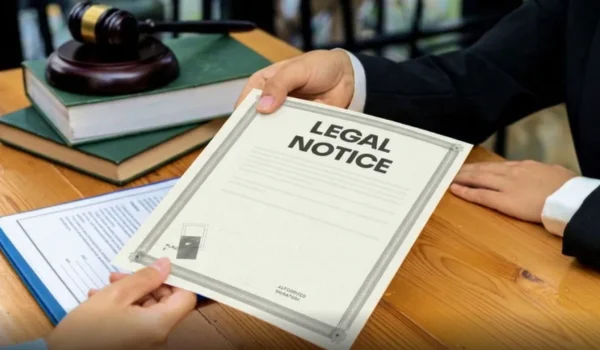
Receiving a legal notice can be stressful, but not replying to a legal notice does not automatically mean that you have admitted the allegations or that the sender has won the dispute.
A legal notice is generally a formal communication or demand from a person, company, lawyer, or organisation. It is different from a court summons or court order.
However, ignoring a legal notice can still be risky. The sender may use the lack of response as part of the circumstances when deciding whether to take further legal action, and in some matters a notice may be required before particular proceedings can be initiated.
The consequences therefore depend heavily on what the notice says, why it was sent, the law involved, and whether a response deadline applies.
Quick Information
| Question | Answer |
| Does silence mean you admit the claim? | Not automatically |
| Does the sender automatically win? | No |
| Can the sender take further action? | Potentially, yes |
| Is replying always legally mandatory? | Not necessarily |
| Can ignoring a notice hurt your position? | It can |
| Should you check the deadline? | Yes |
| Should you preserve evidence? | Yes |
| Should you consult a lawyer? | For serious matters, yes |
What Is a Legal Notice?
A legal notice is a formal communication informing someone about a legal claim, grievance, demand, or intended legal action.
For example, a notice may demand:
- Payment of money
- Return of property
- Compliance with a contract
- Compensation
- Stopping certain conduct
- Performance of an obligation
- Resolution of a dispute
It may be sent directly by a party or through an advocate.
A legal notice itself is generally not a court judgment.
What Happens If You Simply Don’t Reply?
There is no single consequence that applies to every legal notice.
Generally, several things can happen.
- Nothing immediately happens
The sender may decide not to take further action.
- The sender may send another communication
They may provide another opportunity to respond or settle the dispute.
- The sender may start legal proceedings
Depending on the matter, they may approach the appropriate court, tribunal, authority, police or other forum.
- The dispute may become harder to resolve
If you don’t respond, you may lose an early opportunity to explain your side or negotiate a settlement.
- The sender may rely on the surrounding circumstances
A lack of response can become part of the factual background, although silence does not automatically prove that every allegation in the notice is true.
Does Not Replying Mean You Admit Everything?
No, not automatically.
This is one of the most important points.
Suppose a notice says:
“You owe me ₹10 lakh.”
If you don’t reply, that does not by itself legally transform the ₹10 lakh claim into an established debt.
The sender may still need to establish their claim through the appropriate legal process if you dispute it.
However, there can be exceptions depending on the specific law, contract, proceeding, or evidentiary circumstances.
Therefore, don’t assume either:
“Silence means I admitted it.”
or:
“Silence can never matter.”
Both statements can be misleading.
Can the Sender Take You to Court?
Potentially, yes.
If you don’t respond, the sender may decide to proceed with litigation or another available remedy.
For example:
Legal Notice
↓
No Response
↓
Legal Proceedings
↓
Summons/Notice From Court
↓
Hearing
This is only a simplified example. The actual process depends on the type of dispute.
Legal Notice vs Court Summons
Don’t confuse the two.
Legal Notice
Usually communicates a person’s or organisation’s claim or demand.
Court Summons
Is part of a formal judicial proceeding and requires a person to appear or respond according to the court’s directions.
Therefore, ignoring a lawyer’s notice and ignoring a court summons are not legally equivalent situations.
A court summons should generally be treated with much greater urgency.
Does Ignoring a Legal Notice Mean You Will Automatically Be Sued?
No.
The sender decides whether to take the next step, subject to the applicable law and procedure.
They might:
- Negotiate
- Send another notice
- Drop the matter
- Initiate arbitration
- Approach a court
- Approach another legally competent authority
The response depends on the dispute.
Why Responding Can Still Be Important
Even where a response is not strictly mandatory, replying can sometimes be strategically useful.
A properly prepared response can:
- Deny incorrect allegations
- Clarify facts
- Provide documents
- Explain your position
- Correct misunderstandings
- Raise legal objections
- Make a settlement proposal
- Create a contemporaneous record of your position
But a response should not be written emotionally or casually.
What If the Notice Contains False Allegations?
Don’t assume that you must accept them.
You can respond by clearly stating:
- Which allegations are incorrect
- What actually happened
- Which documents support your position
- Whether you dispute the amount claimed
- Whether the sender has misunderstood the agreement
- Any relevant legal or contractual issue
For a significant dispute, have an advocate draft or review the reply.
What If the Legal Notice Is Genuine but You Cannot Pay?
Ignoring the notice generally doesn’t make the underlying financial problem disappear.
Depending on the situation, you may consider:
- Requesting additional time
- Negotiating a settlement
- Proposing instalments
- Disputing an incorrect calculation
- Making a partial payment where appropriate
- Seeking professional legal advice
Don’t make promises you cannot fulfil.
What If You Agree With the Claim?
If you believe the claim is valid, you still shouldn’t automatically transfer money to an account mentioned in an unexpected notice without verification.
First verify:
- Who sent the notice
- The amount claimed
- The underlying transaction
- The payment details
- Whether interest or charges are properly calculated
- Whether a settlement can be documented
For significant amounts, obtain legal advice before signing an undertaking or settlement.
What If You Missed the Reply Deadline?
A missed deadline does not necessarily mean that you have automatically lost your legal rights.
However, you should act promptly.
You can consider:
- Reviewing the notice.
- Understanding why the deadline was missed.
- Collecting your documents.
- Getting legal advice.
- Sending an appropriate response where still useful.
- Preparing for any further proceeding.
Do not wait for another notice simply because the original deadline has passed.
What If You Never Received the Notice?
This can become important if the sender later claims that notice was served.
Questions may include:
- Where was it sent?
- Which address was used?
- Was delivery attempted?
- Was it returned?
- Was it sent electronically?
- What does the applicable law say about valid service?
Keep your address and contact details updated where appropriate, and preserve evidence showing what you actually received.
What If the Notice Came by Email or WhatsApp?
Electronic communication can be relevant in modern disputes, but don’t assume that every message claiming to be a legal notice is genuine or legally effective in the same way.
Check:
- Sender’s identity
- Advocate details
- Case/reference number, if any
- Underlying dispute
- Attached documents
- Digital signature or verification information, where applicable
If it claims to be from a court, verify it independently through the appropriate official court system.
For Indian court-related information, you can use the official eCourts Services portal: https://services.ecourts.gov.in/
Do not rely solely on a phone number or payment link included in a suspicious message.
What If the Notice Is Fake?
Unfortunately, scammers can send messages designed to look like legal notices.
Warning signs can include:
- Immediate payment demands
- Threats of arrest without a credible legal basis
- Poorly formatted documents
- Unknown advocates
- Suspicious email addresses
- Fake case numbers
- Unverified payment links
- Requests for OTPs
- Requests for passwords or banking credentials
A genuine legal dispute should be independently verified.
Never share your OTP, UPI PIN, banking password, seed phrase or other sensitive credentials simply because someone claims to be a lawyer or court official.
What Happens After a Legal Notice Is Ignored?
A possible sequence could look like this:
Stage 1
You receive a legal notice.
Stage 2
You don’t respond.
Stage 3
The sender decides to take further action.
Stage 4
A formal proceeding may be initiated, if legally available.
Stage 5
You may receive a court summons or other official notice.
Stage 6
You are required to respond according to the applicable procedure.
Stage 7
The matter proceeds through hearings or other legal processes.
This is not automatic in every dispute. The sender may never proceed further.
Can Ignoring a Notice Affect Your Defence?
Potentially.
For example, suppose the notice provides an opportunity to:
- Correct an account
- Provide documents
- Explain a contractual dispute
- Resolve an outstanding payment
- Raise an objection
If you remain silent, the dispute may escalate unnecessarily.
However, whether silence has a specific evidentiary or procedural consequence depends on the applicable law and facts.
Some Notices Are Different
The phrase “legal notice” covers many different situations.
For example:
- Contract dispute
- Property dispute
- Employment dispute
- Consumer dispute
- Defamation claim
- Intellectual-property dispute
- Debt demand
- Cheque-related matter
- Matrimonial/family dispute
- Corporate dispute
The consequences of not responding can vary considerably.
A notice connected with a statutory procedure should therefore not be treated the same way as an ordinary demand letter.
Legal Notice and Limitation Periods
Another important issue is limitation.
Ignoring a notice does not normally stop the clock for limitation periods that may apply to the underlying claim.
The limitation period depends on the nature of the legal action and applicable law.
Therefore, don’t assume:
“They sent me a notice, so I have unlimited time to deal with it.”
You may need to act quickly.
Should You Reply Yourself or Through a Lawyer?
You may consider handling a simple matter yourself when:
- The amount is small
- The facts are straightforward
- There is little legal complexity
- You understand the claim clearly
Consider getting a lawyer when:
- The amount is substantial
- Criminal allegations are involved
- Property is involved
- Your business is involved
- The notice threatens litigation
- A contract is disputed
- There are multiple parties
- You have already received court papers
- You are unsure about your legal rights
A lawyer can help determine whether the allegations have a legal basis and how a response should be framed.
What Not to Do After Receiving a Legal Notice
Don’t panic
A notice is not automatically a court judgment.
Don’t immediately admit liability
First verify the facts.
Don’t destroy evidence
Preserve emails, contracts, invoices, messages and payment records.
Don’t threaten the sender
An emotional response can make the situation worse.
Don’t ignore deadlines
Even when a response is not technically mandatory, deadlines can matter.
Don’t send sensitive information casually
A legal dispute does not automatically give the sender a right to your passwords, OTPs or other credentials.
Don’t assume every notice is fake
Verify it properly instead of dismissing it.
Documents You Should Collect
After receiving a legal notice, create a folder and collect:
- Legal notice
- Envelope/courier record
- Email headers, if applicable
- Contract
- Invoices
- Receipts
- Bank statements
- WhatsApp/email correspondence
- Relevant photographs
- Previous notices
- Agreements
- Government or official documents
- Any evidence supporting your position
Keep the original files where possible.
A Simple Response Strategy
If you decide to respond, a basic structure can be:
- Identify the notice
Mention the date and subject of the notice.
- State your position
Clearly say whether you accept or dispute the allegations.
- Address important allegations
Respond to material factual claims.
- Refer to supporting documents
Mention relevant agreements, payments or correspondence.
- State what you want
For example:
- Withdrawal of the claim
- Correction of an incorrect amount
- Additional time
- Negotiation
- Compliance with an obligation
- Preserve your rights
Avoid unnecessary admissions and use appropriate legal wording.
For significant matters, the final response should be reviewed by a qualified lawyer.
Example: Debt-Related Legal Notice
Suppose you receive a notice saying:
“You owe ₹2 lakh.”
But your records show:
₹1.5 lakh was already paid.
Ignoring the notice means the sender may continue to pursue the claim based on their version of events.
A response could provide evidence of the ₹1.5 lakh payment and dispute the remaining amount.
This doesn’t guarantee that the dispute will end, but it puts your position on record.
Example: Contract Dispute
Suppose a supplier claims that you breached a contract.
You believe:
- The supplier failed to deliver the goods.
- You already sent cancellation notice.
- The supplier accepted the cancellation.
A well-supported reply could provide:
- Contract
- Delivery records
- Emails
- Cancellation communication
- Payment records
This may help establish your version before the dispute escalates.
Frequently Asked Questions
Can I go to jail for not replying to a legal notice?
Not simply because you failed to reply to an ordinary legal notice. A legal notice itself is generally different from a criminal court process or court order. However, if the underlying matter involves criminal allegations or a statutory proceeding, the consequences can be different.
Does silence mean I accept the allegations?
Not automatically. Whether silence has legal significance depends on the facts and applicable law.
Can I reply after the deadline?
Potentially, yes, but don’t assume the deadline no longer matters. Respond as soon as possible and obtain legal advice where appropriate.
Can I negotiate after receiving a legal notice?
Yes. Many disputes can potentially be resolved through negotiation or settlement, depending on the nature of the matter.
What if I think the notice is completely false?
You can dispute the allegations. Preserve evidence and consider getting a lawyer to prepare an appropriate response.
Is a legal notice the same as a court case?
No. A legal notice can be sent before court proceedings. A court case involves a formal proceeding before the appropriate judicial or other legal forum.
What if I receive a court summons after ignoring the notice?
Treat the summons as urgent. A summons is part of the formal legal process and should not be treated like an ordinary demand letter.
Final Verdict
Not replying to a legal notice does not automatically mean that you admit the allegations or lose the case. But ignoring it can still be a poor strategy.
The sender may decide to escalate the dispute, and you may lose an early opportunity to:
- Correct false allegations
- Provide evidence
- Negotiate
- Resolve the matter
- Protect your position before litigation
The safest approach is:
Receive notice → Verify it → Read the deadline → Preserve evidence → Understand the claim → Take appropriate legal advice → Respond or take the appropriate next step.
And remember the most important distinction:
A legal notice is generally a formal demand or communication—not a court judgment. But that does not mean it should be ignored.
For a serious financial, property, criminal, employment, business, or contractual dispute, the exact legal consequences depend on the applicable Indian law and the wording of the notice, so a qualified Indian lawyer should review the actual document before you take a major step.
You may also like
Leave a Reply