Prepay Home Loan or Invest Extra Money? A Numbers-Based Comparison (2026)
Suppose you have a home loan and suddenly have an extra ₹10,000, ₹25,000 or ₹50,000 per month.
Should you use that money to prepay your home loan or invest it?
This is one of the most important personal-finance decisions because both options can improve your financial position—but in very different ways.
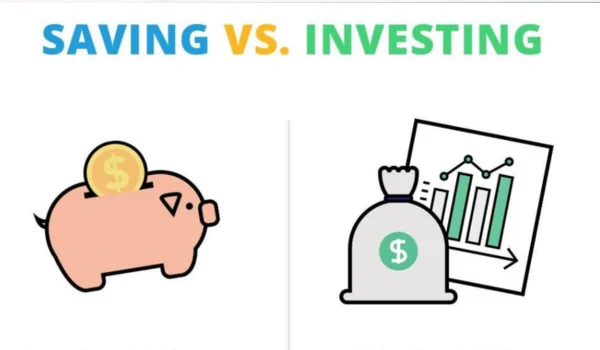
Home-loan prepayment gives you a relatively predictable benefit by reducing future interest. Investing offers higher potential returns but comes with market risk.
The right answer depends on your loan interest rate, remaining tenure, tax situation, investment horizon, risk tolerance and financial goals.
Quick Comparison

| Factor | Home Loan Prepayment | Investing Extra Money |
| Potential Benefit | Interest saved | Potential investment growth |
| Risk | Relatively low | Depends on investment |
| Return | Linked to loan cost | Market/investment dependent |
| Certainty | Higher | Lower |
| Liquidity | Low after prepayment | Depends on investment |
| Debt Reduction | Yes | No |
| Best For | Debt reduction | Long-term wealth creation |
The important point is:
Prepaying a loan is not technically an “investment return”; it is an interest cost you avoid.
Start With Your Home Loan Interest Rate
Suppose your outstanding home loan is:
₹40 lakh
Interest rate:
8%
If you prepay ₹1 lakh, that ₹1 lakh is no longer part of the outstanding principal on which future interest is calculated.
The approximate first-year interest avoided on that amount is around:
₹1,00,000 × 8% = ₹8,000
The actual saving over the remaining loan tenure can be much higher because reducing principal can also reduce future interest calculations.
The Basic Break-Even Idea
The comparison can start with a simple question:
What is your home-loan cost?
Suppose:
Home loan rate = 8%
Now compare it with an investment that you expect to earn:
10% annually
At first glance:
10% investment return > 8% loan rate
So investing may appear better.
But this isn’t a complete comparison.
Investment returns are not guaranteed, while the interest saved through prepayment is much more predictable.
You also need to consider:
- Taxes
- Investment risk
- Loan tax benefits
- Investment costs
- Time horizon
Example 1: ₹10 Lakh Extra Money
Suppose you have:
₹10 lakh available
and a home loan at:
8%
Option A: Prepay
You put ₹10 lakh toward the loan.
The outstanding principal immediately falls by ₹10 lakh.
You then save future interest that would otherwise have been charged on that amount.
Option B: Invest
You invest ₹10 lakh in a diversified market-linked portfolio.
Suppose, purely for illustration, it earns an average:
10% annually
After 10 years, ₹10 lakh compounded at 10% would become approximately:
₹25.9 lakh
But this is a hypothetical illustration, not a guaranteed outcome.
If the actual return averages 6%, the value would be around ₹17.9 lakh.
If the market performs poorly, the outcome could be lower.
Why You Shouldn’t Compare 8% vs 10% Directly
This is one of the biggest mistakes investors make.
Suppose:
Loan rate = 8%
Expected investment return = 10%
The difference is only:
2 percentage points
But the investment return is uncertain.
You could earn:
- 12%
- 8%
- 5%
- 0%
- Negative return over some periods
depending on the investment and market conditions.
The home-loan interest saving, in contrast, is much more predictable.
Therefore, the question isn’t:
“Which number is bigger?”
It is:
“Is the additional potential return worth taking the additional investment risk?”
Example 2: ₹25,000 Extra Every Month
Suppose you have:
₹25,000 surplus every month
You have two choices.
Option A
Use ₹25,000 every month to prepay your home loan.
Option B
Invest ₹25,000 every month.
This becomes a long-term comparison between:
Debt reduction vs wealth accumulation
If you have a long investment horizon and can tolerate market volatility, investing may have greater wealth-building potential.
If you strongly prefer becoming debt-free, prepayment may provide greater financial certainty and psychological comfort.
What Happens When You Prepay?
Home-loan prepayment can provide several benefits.
Lower Outstanding Principal
Your loan balance falls.
Lower Future Interest
Interest is calculated on the outstanding principal, so reducing principal can reduce future interest.
Shorter Loan Tenure
If you maintain your EMI after prepayment, you may be able to finish the loan earlier.
Lower Financial Risk
A smaller debt balance can make your financial position more resilient.
Should You Reduce EMI or Loan Tenure?
Suppose you make a large prepayment.
Your lender may offer the option of:
Lower EMI
Your monthly payment decreases.
Shorter Tenure
Your EMI stays similar, but the loan finishes earlier.
If your objective is maximum interest saving, keeping the EMI broadly unchanged and reducing the tenure can often be more effective.
However, your lender’s terms and loan structure matter.
The Investment Side of the Equation
Investing extra money can potentially create a larger corpus over long periods.
For example, suppose you invest:
₹25,000/month
for 15 years.
Total contributions:
₹25,000 × 12 × 15 = ₹45 lakh
If the investment hypothetically earns 10% annually, the corpus could be approximately ₹1.04 crore.
Again, this is only a mathematical illustration.
Actual market returns can be significantly different, and equity investments carry risk.
Prepayment vs Investment: ₹25,000 for 15 Years
Consider a simplified illustration:
| Factor | Prepay Loan | Invest |
| Monthly Amount | ₹25,000 | ₹25,000 |
| Period | 15 years | 15 years |
| Total Cash Used | ₹45 lakh | ₹45 lakh |
| Potential Benefit | Interest saved | Investment growth |
| Return Certainty | Higher | Lower |
| Market Risk | None on prepaid amount | Depends on investment |
This table doesn’t calculate exact loan savings because that requires your outstanding principal, interest rate, EMI and remaining tenure.
That’s why a proper comparison should use the actual loan numbers.
Tax Benefits Can Change the Calculation
Home-loan tax treatment can affect the decision.
Depending on the property, loan purpose, applicable tax regime and other conditions, borrowers may receive certain tax benefits on home-loan interest and/or principal.
Therefore, don’t simply compare:
Loan rate = 8%
with:
Investment return = 10%
You should consider the effective after-tax cost of the loan and the after-tax investment return.
Tax rules can change, so check the current rules applicable to your situation before making a large decision.
What If You Have No Emergency Fund?
This should come before both aggressive prepayment and aggressive investing.
Suppose you have:
₹5 lakh extra cash
but no emergency savings.
Putting the entire ₹5 lakh into the home loan may leave you without enough accessible money if:
- You lose your job
- A major medical expense occurs
- Your income is interrupted
- An urgent family expense arises
A sensible structure may be:
Emergency fund → Insurance → Debt strategy → Long-term investing/prepayment
The exact order depends on your circumstances.
What If You Have High-Interest Debt?
Suppose you have:
- Credit-card balance at a high interest rate
- Personal loan at a high rate
- Home loan at a comparatively lower rate
You may want to address the expensive debt before aggressively prepaying the home loan.
For example:
Credit-card debt → Personal loan → Home loan
may be financially more logical than putting all spare money toward the home loan.
When Home-Loan Prepayment Makes More Sense
Prepayment may be attractive if:
- Your loan rate is relatively high
- You are uncomfortable with debt
- You have a shorter remaining tenure
- You already have adequate emergency savings
- Your retirement investments are on track
- You prefer predictable financial benefits
- You don’t have a high tolerance for market volatility
For some borrowers, being debt-free before retirement is a major financial goal.
When Investing May Make More Sense
Investing extra money may be more attractive if:
- Your home-loan rate is relatively low
- You have a long investment horizon
- Your emergency fund is complete
- You have adequate insurance
- You can tolerate market volatility
- Your long-term investment strategy is already established
- You don’t need the money in the near future
The longer your horizon, the more opportunity you have to benefit from compounding—but also the more important it is to choose investments appropriate for your risk profile.
A Hybrid Strategy Can Be Better
You don’t always have to choose one.
Suppose you have:
₹30,000 extra every month
You could consider:
₹15,000 → Home-loan prepayment
₹15,000 → Long-term investment
This provides:
- Debt reduction
- Investment growth potential
- Diversification of your financial strategy
Another approach is to use annual bonuses for loan prepayment while maintaining regular SIPs.
Example: 50:50 Strategy
Suppose:
Extra monthly cash = ₹20,000
You allocate:
₹10,000 → Home loan
₹10,000 → SIP
Over 10 years, your total additional contribution would be:
₹20,000 × 12 × 10 = ₹24 lakh
Half goes toward reducing debt, while the other half remains invested.
This approach can be psychologically easier for people who want both:
Lower debt + growing investments
A Simple Decision Rule
You can use this framework:
Loan Rate Is High
Consider giving greater priority to prepayment.
Loan Rate Is Moderate + Long Investment Horizon
A combination of investing and prepayment may make sense.
Loan Rate Is Low + Strong Long-Term Investment Capacity
You may consider investing more, provided you can tolerate market risk.
But don’t treat these as rigid thresholds. Your tax situation and investment risk matter.
Don’t Forget Liquidity
Once you prepay a home loan, the money is effectively tied up in your property.
You generally cannot simply withdraw the prepaid amount when you need it.
An investment portfolio may offer greater liquidity, depending on the investment.
Therefore:
Prepayment = lower debt
Investment = potentially greater accessible wealth
The trade-off between these two is important.
A Numbers-Based Checklist
Before deciding, write down:
Home Loan
- Outstanding principal: ₹______
- Interest rate: ____%
- Remaining tenure: ____ years
- Current EMI: ₹______
- Prepayment terms: ______
Financial Position
- Emergency fund: ₹______
- Other debt: ₹______
- Monthly surplus: ₹______
- Existing investments: ₹______
Investment Plan
- Expected investment horizon: ____ years
- Risk tolerance: Low / Moderate / High
- Investment type: ______
Then compare the two strategies.
The Biggest Mistake: Assuming Investment Returns
Don’t say:
“Equity gives 12%, my loan costs 8%, so investing is automatically better.”
That’s not how the comparison works.
A 12% equity return is not guaranteed.
A better comparison is:
After-tax expected investment return − investment costs − risk
versus
Effective cost of the home loan after applicable tax benefits
Even then, the decision involves personal risk tolerance and financial goals.
What About Retirement?
If you’re already heavily invested for retirement, prepaying the home loan may become more attractive.
For example, suppose you are 45 and expect to retire at 60.
You have:
- Adequate retirement investments
- A large emergency fund
- A home loan that will continue into retirement
Using additional cash to reduce the loan could potentially improve your retirement cash flow.
But if your retirement corpus is inadequate, putting all surplus money into the home loan may leave you house-rich but investment-poor.
Home Loan vs Investment: The Bigger Picture
Your objective shouldn’t be:
“How do I maximize returns?”
It should be:
“How do I improve my overall financial position?”
That includes:
- Net worth
- Liquidity
- Debt
- Investment corpus
- Emergency savings
- Retirement readiness
- Financial security
A person with a ₹50 lakh investment portfolio and ₹40 lakh home loan may be financially better positioned than someone with a fully paid ₹50 lakh home but almost no liquid investments—or vice versa, depending on the complete balance sheet.
Final Verdict
There is no universal winner between home-loan prepayment and investing extra money.
Choose More Prepayment If:
You value certainty + want to reduce debt + have adequate liquidity + have a relatively expensive loan.
Choose More Investment If:
You have a long horizon + adequate emergency savings + manageable debt + high risk tolerance + a well-planned investment strategy.
Consider a Combination If:
You want to reduce debt while continuing to build long-term wealth.
For many homeowners, the hybrid approach is particularly practical:
Keep your emergency fund → manage expensive debt → continue long-term investing → use part of your surplus for home-loan prepayment.
The most important thing is to calculate the decision using your actual loan rate, remaining tenure, EMI, outstanding balance, tax situation and investment horizon, rather than assuming that one strategy is always better.
You may also like


Leave a Reply