How to Remove Excess Oil From Curry After Cooking
Too much oil floating on the surface of a curry can make an otherwise delicious dish feel heavy and greasy. This can happen when more oil is added than necessary, when the gravy releases oil during cooking, or when a curry is prepared with naturally fatty ingredients such as cream, coconut or meat.
Fortunately, excess oil can usually be removed without ruining the flavour or making the curry watery. The best method depends on how much oil is present and whether the curry is hot, warm or already cooled.
1. Spoon the Oil From the Surface
The simplest method is to remove the visible oil with a spoon.
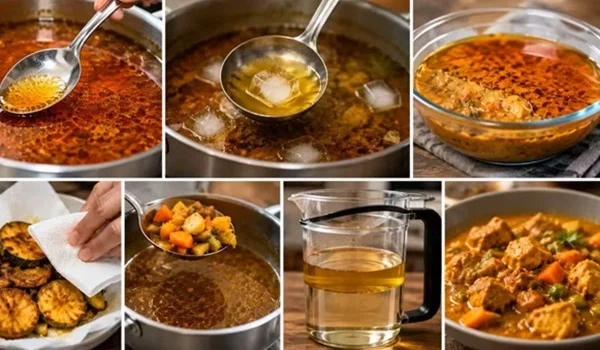
Let the curry rest for a few minutes so the oil rises to the top. Then gently tilt the cooking vessel if necessary and scoop the oil from the surface.
Try not to stir the curry while doing this because stirring mixes the oil back into the gravy.
This method works particularly well for thick gravies where the oil forms a clearly visible layer.
2. Use a Ladle
For a large quantity of curry, a small ladle can be easier than a spoon.
Hold the ladle gently at the surface, allowing the oil to collect inside without taking too much gravy. Empty the oil into a separate container and repeat until the desired amount has been removed.
Work slowly because the oil and gravy can look similar when the curry is hot.
3. Refrigerate the Curry
If you are not serving the curry immediately, refrigeration can make oil removal much easier.
As the curry cools, many types of cooking oil and animal fat become more solid and rise or collect on the surface.
How to do it
- Allow the curry to cool appropriately.
- Transfer it to a suitable covered container.
- Refrigerate it.
- Once chilled, inspect the surface.
- Remove the solidified fat with a spoon.
- Reheat the curry thoroughly before serving.
This method can be particularly useful for meat-based curries containing rendered fat.
4. Use an Ice Cube Carefully
A quick kitchen technique is to place an ice cube in a spoon or other clean utensil and gently move it across the surface of the curry.
The cold surface can encourage some of the oil or fat to collect around it. Remove the ice before it melts significantly into the curry.
This technique is more useful for removing small amounts of surface fat and is not necessary when a simple spoon works.
5. Use a Paper Towel for Surface Oil
A clean, food-safe paper towel can sometimes be briefly placed on the surface to absorb excess oil.
Touch the towel lightly to the surface and remove it immediately. Do not press it deeply into the curry, as it can absorb gravy along with the oil.
This method is best reserved for small amounts of oil rather than a heavily oily curry.
6. Let the Curry Settle Before Serving
Sometimes the best approach is simply to stop stirring and allow the curry to rest.
When a curry is left undisturbed, oil often separates from the water-based gravy and collects on top. Once it has separated clearly, you can remove it with a spoon or ladle.
This is especially helpful after cooking curries with an onion-tomato base.
7. Remove Fat From Meat Curries
Meat curries can contain oil as well as fat released from the meat.
If there is a thick layer of fat after cooking, allow the curry to cool enough for the fat to separate. Refrigeration can make this even easier.
Remove the solidified fat from the surface before reheating.
Keep in mind that some fat contributes significantly to the flavour and texture of a meat curry, so removing all of it may make the dish less rich.
Can You Add Water to Remove Excess Oil?
Adding water is generally not the best way to remove oil.
Water does not dissolve cooking oil. It may simply make the gravy thinner while leaving much of the oil behind.
If the curry is already watery, adding more water can make the texture even worse.
Instead, allow the oil to separate and physically remove it from the surface.
Can Potatoes Absorb Excess Oil?
Potatoes are sometimes recommended as an “oil absorber,” but this idea is often exaggerated.
Adding potatoes can change the overall composition of a curry and may take up some of the gravy, but it does not selectively remove large quantities of oil.
If you already want potatoes in the dish, adding them can be useful. However, for removing excess oil, skimming the surface is more direct and controllable.
What About Adding More Gravy?
If the curry is excessively oily because too much oil was used during cooking, you can prepare an additional portion of the curry base without adding extra oil and mix it in.
For example, depending on the recipe, you could add more:
- Cooked onion
- Tomato puree
- Unsalted vegetables
- Cooked dal
- Unsalted gravy base
This increases the total volume and distributes the oil throughout a larger amount of food.
However, this is not the same as actually removing the oil. If the goal is specifically to reduce fat, physically skimming it off is more effective.
How to Prevent Excess Oil in Curry
Prevention is easier than correcting an oily curry.
Measure Oil Before Adding It
Instead of pouring oil directly from the bottle, measure the quantity required by the recipe.
Cook at the Appropriate Heat
Extremely high heat can cause ingredients to fry excessively and may lead to unnecessary oil use.
Watch Fatty Ingredients
Cream, coconut products, butter, ghee and fatty cuts of meat can all contribute additional fat. Consider the total amount of fat coming from every ingredient.
Do Not Add Oil Just Because It Has Separated
In some traditional curries, oil separating from the gravy is a normal part of cooking and does not necessarily mean more oil needs to be added.
How Much Oil Should Be Removed?
There is no need to remove every visible drop of oil. Some oil contributes to the taste, aroma and mouthfeel of curry.
If the curry tastes excessively greasy or leaves a heavy layer of oil in the mouth, removing some of the surface oil can improve the eating experience.
Final Thoughts
The easiest way to remove excess oil from curry after cooking is to let the curry settle and skim the oil from the surface with a spoon or ladle. If you have more time, chilling the curry can make separated fat easier to remove.
Avoid adding large amounts of water simply to deal with oil, and do not rely on potatoes as a quick oil-removal trick. For future batches, measuring oil carefully and considering the fat contributed by other ingredients can help you prepare a balanced curry from the beginning.
You may also like
Leave a Reply